
By Mufazzal Hossain
Winning was hard. Governing a strained city, under a hostile federal administration, is an even harder test ahead.
Well, that’s it, Zohran won!
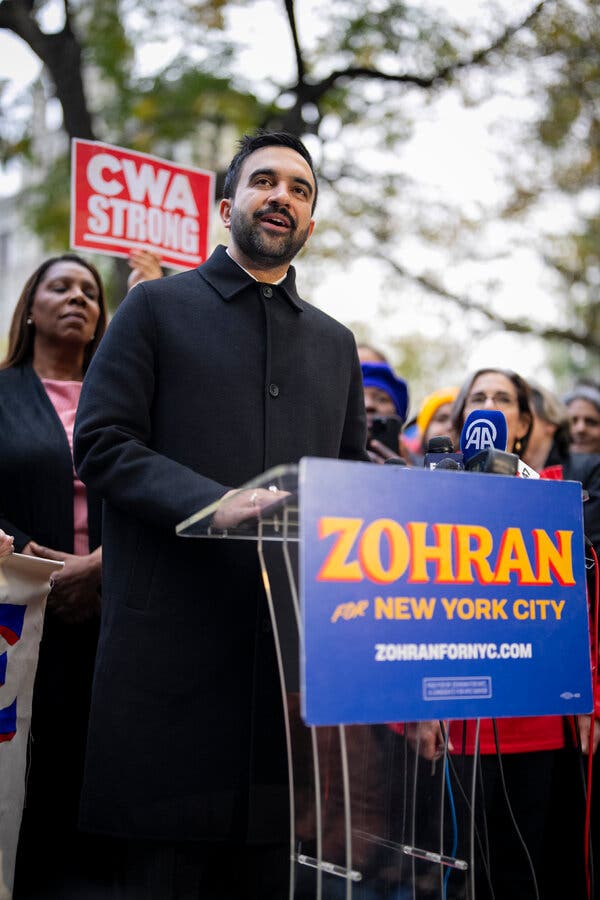
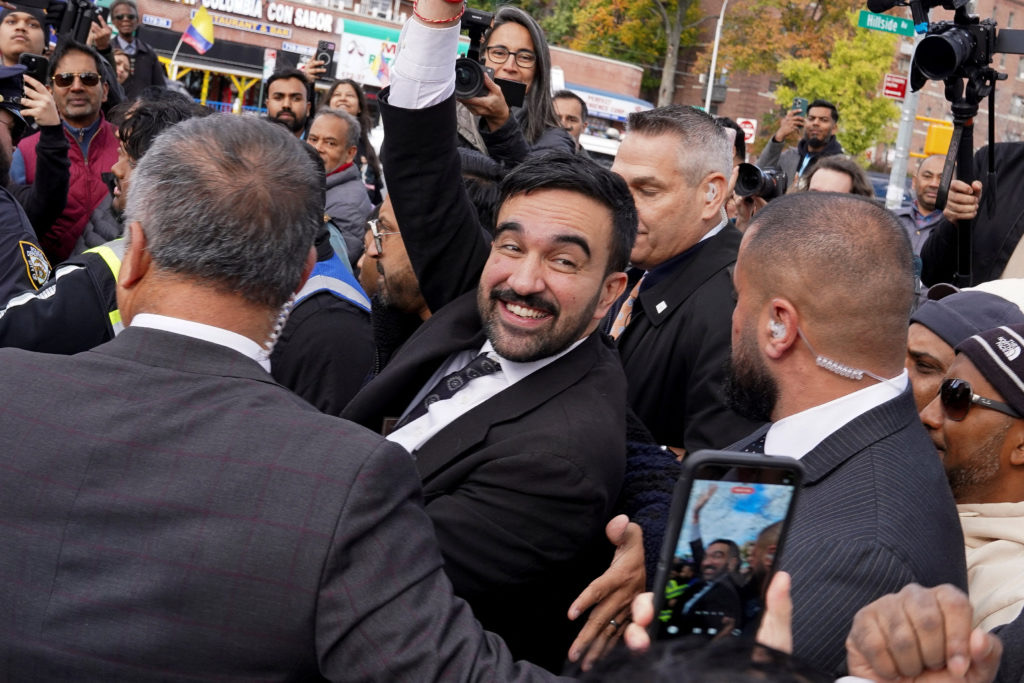
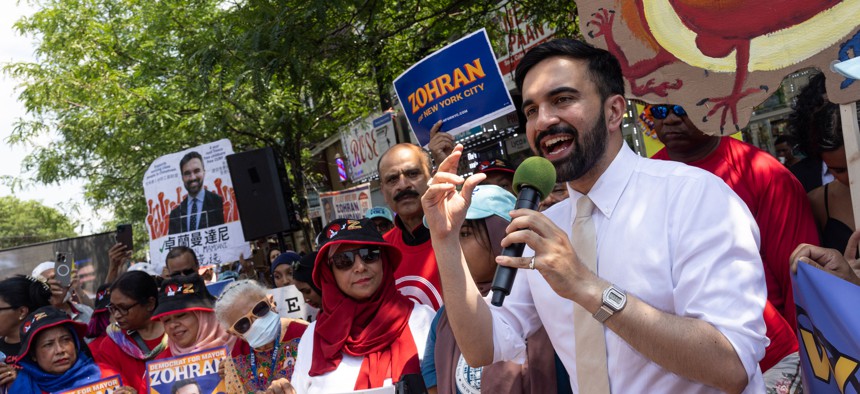
As the race is being called right now, I’m standing in the middle of the celebrations, the gatherings, the high voltage excitement, and yet there’s a deeper recognition here: this is more than just the end of a campaign. This is the beginning of a political shift in New York City and possibly within the Democratic Party nationwide.
I remember when Zohran Mamdani’s name first started circulating as a possible mayoral candidate. People around me dismissed it without hesitation. Some said it was “career suicide.” Others insisted it was “not strategic,” that he was throwing away a promising future in politics. The whispers were all the same: that he was only running to “make space” for new leadership, not because he could actually win. Party insiders scoffed. Operatives confidently claimed Andrew Cuomo would take the nomination, arguing traditional and older Democratic voters would see him as the only person strong enough to go up against Donald Trump.
But I didn’t believe that. Before the viral TikToks, before the small-dollar donations poured in, before the endorsements flipped, I asked Zohran at an event about when he planned to announce. He told me it would be the following month. And I already knew then: he could win. The political ground was shifting beneath our feet, whether the polls saw it or not.




For decades, Democrats have made the same mistake. They obsessed over one battleground state instead of strengthening their coalition. In 2000, it was Florida. In 2004, it was Ohio. In 2016, it was Florida again. And in 2024, they fixated on Pennsylvania while ignoring that the Democratic coalition in 2024 was weaker than in 2020. The signs of collapse were written on the wall long before Election Day. That is why it did not surprise me when Kamala Harris lost. It fit a familiar pattern of strategic complacency, weak coalition building, and a refusal to see the ground shifting.
And every time Democrats lose like this, there is political backlash. After Trump’s first win in 2016, Alexandria Ocasio-Cortez defeated Joe Crowley, and it changed the party forever. AOC’s victory signaled a generational revolt against establishment politics. Zohran Mamdani’s win carries that same energy, but in a different chapter, a direct response to Donald Trump’s return to power and to a Democratic leadership perceived as cautious and disconnected. This is not an isolated win. It is the first visible shift of a new era built on disillusionment with centrism, institutional failures, and a hunger for moral clarity.
Like AOC, Zohran did not emerge from machine politics. He rose through organizing, bold policy, and community trust. In the primary, he used creative ideas, social media, and real conversations to win. The general election was different. He had to expand beyond the movement and consolidate institutional power. The same leaders who once backed Cuomo started endorsing Zohran. Not because they suddenly believed in his ideas, but because they understood survival. After 2024’s defeat, they could not reject their own party’s nominee without hurting themselves.
Cuomo’s campaign made many fatal miscalculations, but one of them speaks to the fact that political mathematics isn’t its strong suit. It underestimated the electorate. It treated older voters as static, loyal moderates. But the older voters who came out this time were different. Many were immigrants, Bangladeshi, Arab, African, Caribbean, and their votes followed the political instincts of their children and grandchildren. Zohran’s victory proves the political map is evolving. The myth that older voters are inherently conservative or moderates is outdated. Immigrant seniors are voting not for dynasties but for dignity, for economic security, moral leadership, and community loyalty. Coalitions today are not built only through ideology. They are built through shared pain, shared struggle, and shared hope.
Furthermore, people did not forget Cuomo’s actions. They remembered when he avoided mosques until being publicly criticized. They heard his repeated warnings about “another 9/11,” and they recognized it as Islamophobia, not leadership. People recognized that Cuomo was weaponizing the hurt from 9/11 for his own benefit. Additionally, policy memories cut deep. Cuomo reduced New York City’s Article 6 public health reimbursement from 36 percent to 20 percent. He froze Medicaid spending. He forced nursing homes to admit COVID-positive patients, a decision tied to nearly 15,500 deaths, and likely more. Yes, New Yorkers are tough, like Cuomo says. But toughness does not mean forgetting.
But winning is only the beginning. Now comes the harder part. Zohran inherits a city government that is understaffed, exhausted, and expected to solve crises in housing, healthcare, transit, sanitation, and education all at once. He has promised to protect immigrants, deliver affordability, and fully staff public agencies. To make any of that real, he will need the state legislature, the governor, and federal funding to cooperate.
Conflict is inevitable, especially with the White House on immigration. But unlike Mayor Adams or former Governor Cuomo, I believe Zohran will not sell out this city or its people to score political points. He will fight. And when he does, I hope the courts, the legislature, and the people stand with him.
This is where activism has to become administration. Campaign chants must survive procurement delays, budget negotiations, agency vacancies, union contracts, legal barriers, and political resistance. No modern mayor has fully aligned progressive ambition with bureaucratic execution. If Zohran succeeds, he will set a new standard for American cities.
Zohran Mamdani’s win closes one era and opens another. It rejects nostalgia and embraces a coalition born from economic struggle, immigrant identity, and generational courage. Whether this becomes a lasting transformation, or just a moment, depends on whether ideals can survive impact with reality.
Winning was the response. Governing will be the test. And I believe, if any mayor can pass that test with the power of the people behind him, it is Zohran Kwame Mamdani, the Shah Rukh Khan of American politics.

 The Bengal Gazette