By Mufazzal Hossain

New York has always been this unpredictable, yet establishment‑controlled political firehouse. It is shaped by its diversity, population, and wealth, despite being an unaffordable city. These are the issues mayoral candidates in New York City are running on. In most cases, Eric Adams would’ve finished out a second term. But after a scandal‑ridden first term and his subsequent cozying up with President Trump, it seems he is now limited to being a one‑and-done mayor.
Initially, New York City Comptroller Brad Lander and New York State Senator Zellnor Myrie announced their mayoral candidacies. Senate elections occur every even‑numbered year, whereas city elections happen every odd‑numbered year. Even if Myrie loses the mayoral bid, he can go back to being a State Senator. The risk is really for Lander. He can only run for one city position at a time. If he loses the mayoral bid, he will simply finish out his comptroller term with no political certainty for a return to public office.
Lander probably would’ve been the progressive favorite if Zohran Mamdani weren’t running for the Mayor of New York City. New York City Council Speaker Adrienne Adams could have been a stronger contender if she had announced her candidacy earlier. Zohran’s and Adrienne’s bases don’t necessarily cut into one another, as they target two different voter groups. One is heavily focused on nontraditional and new voters inspired by Zohran’s campaign. The other is focused on traditional, reliable votes.

This is where it gets interesting. The traditional, reliable voters would also typically vote for former Governor Andrew Cuomo. Although every candidate endorsed by the Working Families Party (WFP) encourages voters not to rank Cuomo, many of these voters still see him as an effective leader. They believe he can make tough choices for the bigger picture and the greater good. This is why Cuomo has consistently led in the polls, even if only by a narrow margin. Of course, polls do not reflect the true outcomes of an election. They’re conducted on a sample size, and most people responding to polls are traditional voters.
Kamala Harris’s loss in November 2024 came as a shock to some, and as no surprise to others. That is why we didn’t see any significant campaign activity for a long time — until federal agencies started ramping up their immigration operations. Zohran’s path to victory isn’t just about hoping that the voters will show up to vote. His path to victory depends on how the world around us impacts voters. It depends on making people feel obligated to come out and vote. The immigration raids, Mayor Adams’ friendliness with the President, rising costs of living, and fatigue with the endless cycle of blaming the opposition are all motivating factors for a Blue city like New York. These issues drive city voters to seek a candidate with a bold set of campaign promises: Universal Childcare, Rent Freeze, City‑Owned Grocery Stores, Free Buses, and Taxing the Rich.
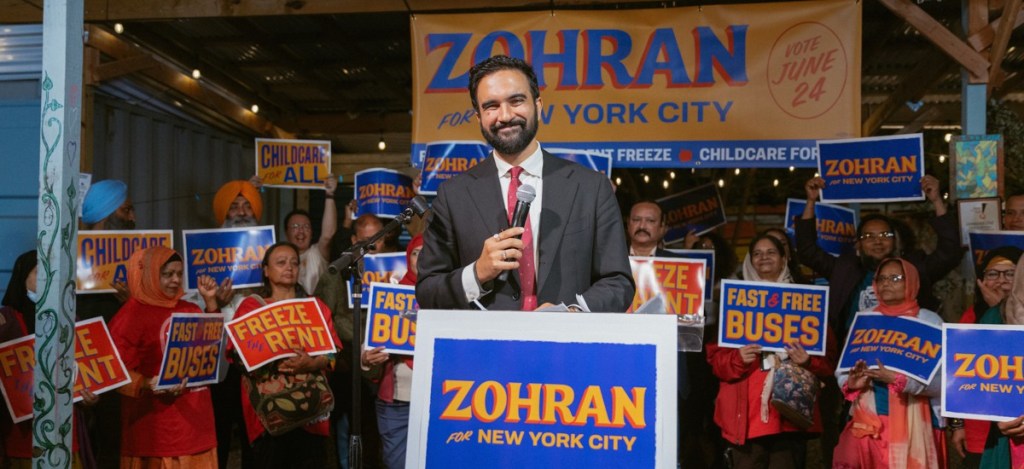
These issues resonate with voters because making New York City more affordable is a priority. However, this can only happen if the financial supply required for these services meets the actual demand. Should Zohran win the mayoral election, earning a second term will hinge on how sustainably and feasibly he delivers these campaign promises.
If this were a normal election cycle in ordinary times, the voting population would be focusing on these questions. However, we live in times as extraordinary as when David Dinkins was elected mayor of New York City. Although the issues are different now than they were in 1990, the voter sentiment, political response tactics, and long-standing bureaucratic institutionalism remain somewhat similar.
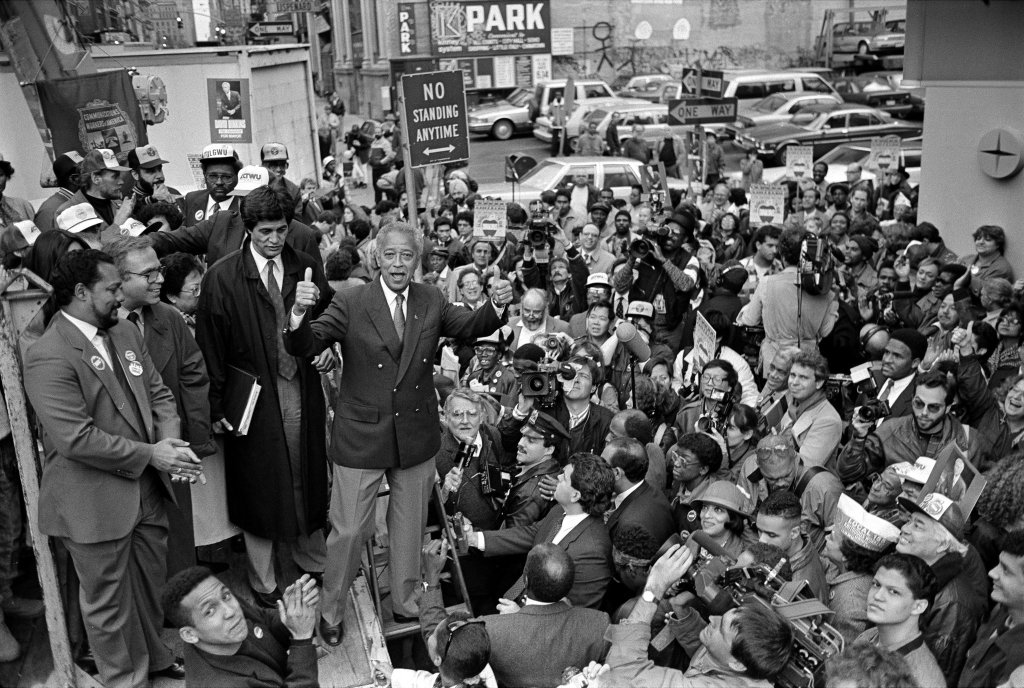
Mayor Dinkins was the first Black American mayor of New York City. He faced heavy political and bureaucratic challenges throughout his term. These challenges marred his goodwill and good intentions to the point where he was limited to serving only one term, despite making progress on his campaign promises. He grappled with budget constraints during an economic recession, faced resistance from the State Legislature, navigated racial tensions, and encountered political opposition. But the voting population didn’t understand these struggles. As a result, many of the policies Mayor Dinkins managed to advance remained invisible to New Yorkers.
The parallel being drawn here is that Zohran Mamdani would be the city’s first Muslim and South Asian-American mayor. After 9/11, the NYPD launched a sweeping surveillance program targeting Muslim neighborhoods, mosques, and student groups — regardless of suspicion. It drew sharp criticism from civil liberties advocates and Muslim leaders, leading to the disbanding of the Demographics Unit in 2014. Similarly, the Strategic Response Group (SRG), created as a counterterrorism measure, has been used to suppress protests and civil unrest. Its aggressive tactics have sparked growing calls for its disbandment as activists and elected leaders push to end treating dissent as a threat.
It will come as no surprise when Mamdani uses his executive authority to reject any form of suspicionless surveillance of any community, and to limit the SRG’s scope of work, if not disband it outright. Although Mamdani has taken a nuanced stance on public safety, he remains a victim of unfair backlash based on the presumption of privilege. He has already faced death threats. As mayor, he will encounter Islamophobic challenges, racial tensions, and intense political opposition. The city is at risk of not receiving enough federal funds due to its sanctuary city policies, and Zohran will not budge on that stance. This means the Mamdani administration will have to find ways to generate enough revenue to cover the city’s already ballooning budget and fund its economic development proposals.

Mamdani will also rely heavily on the State for financial support, just as Mayor Dinkins did. Programs like free buses and taxing the rich are preempted by the State. New York City can only fund universal child care, sustain a rent freeze on stabilized apartments, and subsidize overhead costs for city‑owned grocery stores if the State approves Zohran’s plan to tax the wealthy. Given that multimillion‑dollar donors are pouring money into candidates across all levels of government, it will be interesting to see how New York State responds to Zohran’s ambitious agenda. His second term will hinge on that “interest.” Nonetheless, Zohran’s work — whether seen or unseen — will lay the groundwork for a new wave of political leadership and policies. In the year 2025, we need this new wave because the movers and shakers of the mid‑1990s have become complacent.
The Democratic Party’s complacency is another factor that has fueled Zohran’s rising popularity. There was a time when Democratic clubs throughout the city recruited young leaders for their creativity and drive. But that started to change in the mid‑1990s. The party stopped looking for movers and shakers and began relying instead on foot soldiers. Eventually, that shift led to the death of Democratic clubs, especially after Joe Crowley lost his congressional seat to Alexandria Ocasio-Cortez (AOC). The younger generation realized they can actually bring a folding chair to the table. This approach of organized, decentralized activism is what fueled Zohran’s growing appeal.
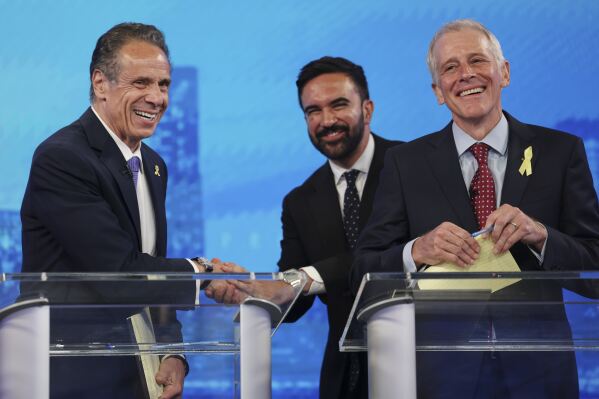


In some polls, Cuomo is leading by a margin, and in at least one poll, Zohran is leading by a margin. However, we must remember that in the weeks leading up to the primary, even AOC was far behind in the polls. Regardless of the outcome of the Democratic primary, Zohran has a higher probability of winning the WFP line in the WFP primary. If that is the case, his real battle will be in the general election. There, he will face Cuomo as the Democratic Party candidate, Adams as an independent, and Sliwa as a Republican.
If Zohran wins the Democratic Party primary, then he will still have to face Cuomo (as an independent), Adams (as an independent), and Sliwa (as a Republican). It goes without saying that Zohran has a better chance of winning the general election as the Democratic nominee, as the others will split the moderate and conservative votes regardless of party affiliation. Should Zohran appear in the general election as only the WFP candidate, his chances of winning still exist — but he will have to work harder to persuade Democrats to vote for him over the party nominee. In many ways, how Democrats fare in New York City will set the tone for the party’s performance in the upcoming midterms. New York has long been a bellwether for Democratic strength and unity across the nation, and this race will be no exception.


 The Bengal Gazette