By Rimon Tanvir Hossain


As the L.A. brush fires which started on Tuesday, January 7, 2025, rage on with over 57,000 acres of Los Angeles County burning from four different vicinities—the Pacific Palisades, Santa Clarita, West Hills and Altadena—, inner-city immigrant communities are bracing themselves for the potential spread to their dense and heavily populated neighborhoods. One such community is the Little Bangladesh neighborhood located in the Mid-City, Koreatown area, home to over 15,000 first-generation, working-class Bangladeshi immigrants who have been settling in the neighborhood since the 1990s, earning the Little Bangladesh designation in 2010.
The population density of Little Bangladesh as well as the wider Mid-City, Koreatown neighborhood is 42,611 people per square mile, making the community one of the densest neighborhoods in the United States. In this neighborhood, Bangladeshis own six grocery stores, three restaurants, two electronics shops, two liquor stores and are heavily involved in the leadership of two mosques that serve this community. Alongside Korean, Oaxacan, Salvadoran and Filipino storefronts, the Los Angeles Bangladeshi community have a strong presence especially on 3rd Street, which former L.A. Councilmember Tom LaBonge once considered naming, “International Mile.” While they receive heavy foot traffic on any given week, their respective management and leadership have noticed a sharp decline in business and visits due to the fires. The owner of Sonar Bangla, a corner grocery store next to Masjid Al Falah on 3rd and Serrano, Mohammed Kawser Ali, stated how, “very few people are coming and it hasn’t been the same since the fire.”
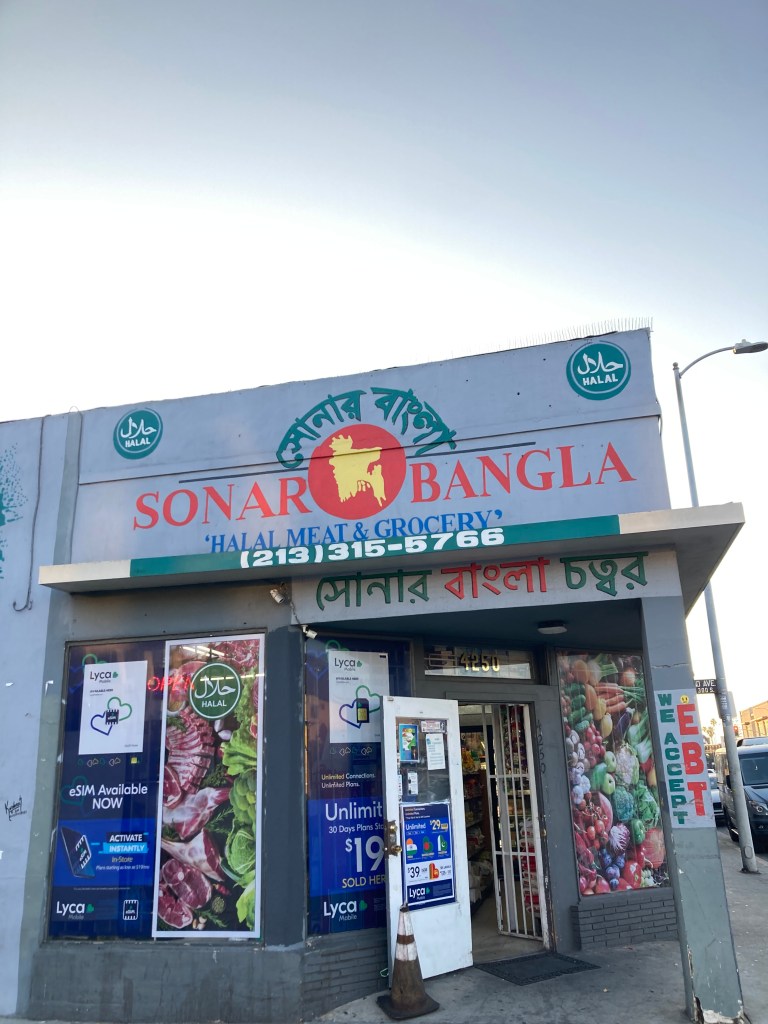
When questioned about the business the same week, Ali stated that “the business is very slow.” One block down, another grocery store on 3rd Street and Hobart Avenue, Khurshid Alam, the owner of another grocery and restaurant, Amar Bangla, echoed a similar experience. “Compared to before the fire, few customers are coming.” When Alam was questioned whether the city provided any support or notification for support to their business after the fires, he reported how, “we are receiving notices on our personal safety, but not a single word from the city for our small business support.” Alam also added, “we want the fires to slow down because if we have to leave the store, we lose everything and have no support from the city.”
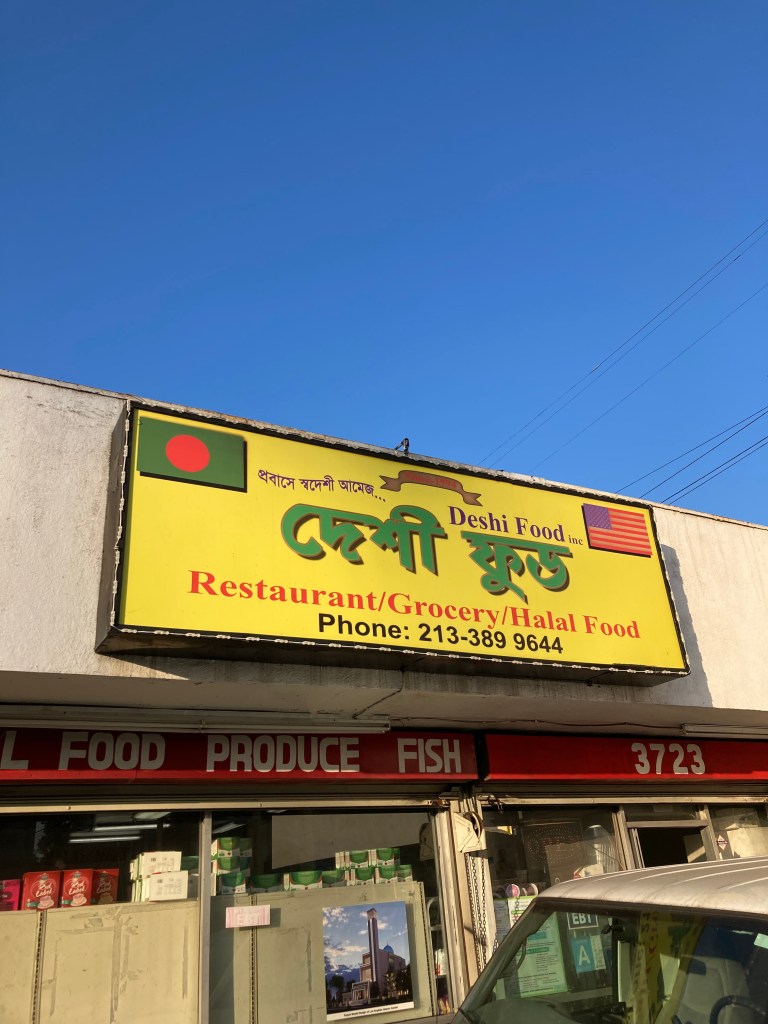
Another long-standing Little Bangladesh storefront, Deshi, owned by Nazmul Chowdhury, argued that their business hasn’t yet been affected by the fires. Chowdhury said, “the fires have only recently started and I can’t say that it has been affecting our business.” When questioned about resources or outreach from the city authorities, he said not yet, but that, “SNAP, EBT and other benefits are in effect until February 8, 2025.” When the conversation came to whether Chowdhury had any evacuation plans, Chowdhury mentioned that similar to the experience from COVID-19 lockdowns, “we have no plans.” Hare Nath, the owner of Asian Mart, a grocery store on Alexandria Ave and 3rd Street which he has owned for twenty-five years, explained how, “very few customers are coming because many of my customers are from the affected neighborhoods.” On top of having his business heavily affected the week of the fires, Nath also stated that, “we have received no special notices for our businesses aside from the AMBER alerts to our personal phones.”

Kasturi is one of the last Bangladeshi-owned restaurants on 3rd Street, located on the corner of Berendo Street, whose manager Mukul Mridha, expressed how his business has slowed similar to the experience of the majority of Bangladeshi grocery stores and restaurants on 3rd Street. When asked if he had any evacuation plans, Mridha stated, “we have to save our own lives first before the business.” He said that, “typically on Friday, Saturday and Sunday, we don’t have space to offer all our customers a seat, but this weekend, we have had hours gone by without a single customer.” Mridha said that this has been the case since Wednesday when news of the fires started spreading.
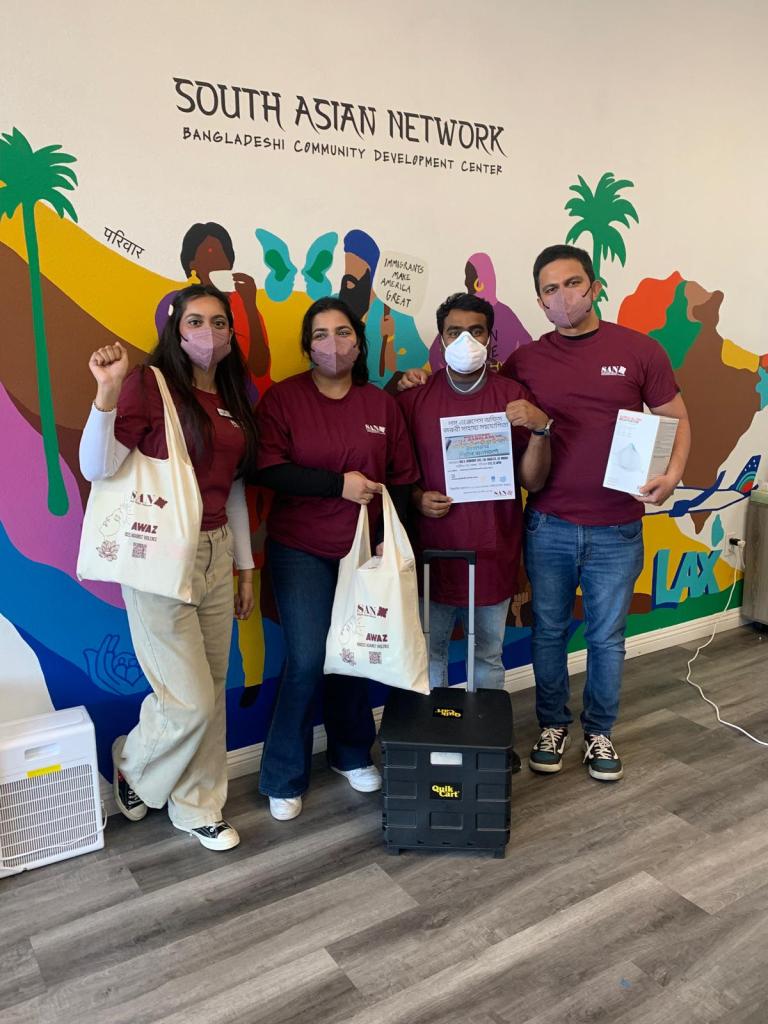


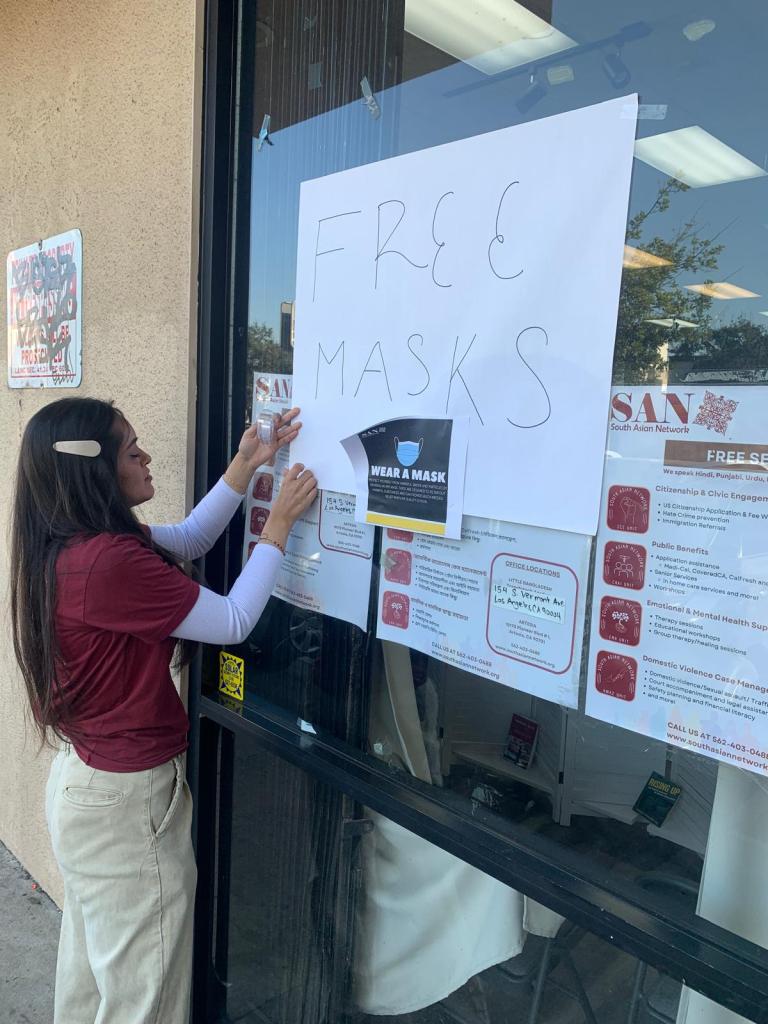

Members of the Artesia-based non-profit organization started in 1990, South Asian Network, a social services and civic engagement organization with a second office in Little Bangladesh opened in 2023, made rounds to every store, restaurant and place of religious worship in the neighborhood to distribute masks, share fliers on fire safety and offer the management a chance to speak about their experience. “After learning firsthand from the South Asian small businesses, we call on the City of Los Angeles to allocate adequate resources for their full recovery from the economic impact of the wildfires,” said Shakeel Syed, Executive Director of South Asian Network. A consensus has been that aside from one exception of Deshi, there has been a considerable drop in their foot traffic, sales, and visits in Little Bangladesh’s small business community. Concerning any communication or notice from the city authorities, none has been made and they remain independent on themselves in case of an emergency. Similarly, on the topic of evacuation plans in case the fires were to spread to Little Bangladesh, none of the small businesses or places of worship have an evacuation plan in order.
“After learning firsthand from the South Asian small businesses, we call on the City of Los Angeles to allocate adequate resources for their full recovery from the economic impact of the wildfires.”
Shakeel Syed, Executive Director of South Asian Network
Residents of Little Bangladesh also expressed concern for the potential of the fires reaching their neighborhood. One resident, Rowshan Sultana, claimed, “We are definitely worried about how the situation would be if we had to evacuate at a moment’s notice.” Another resident, Sheikh Jibran, mentioned that, “The density of this neighborhood makes the possibility of us evacuating from fires all at once a scary, if not impossible situation.” While schools in the Little Bangladesh neighborhood continue to stay open throughout the fire, the Los Angeles Unified School District (LAUSD) has encouraged students to wear masks to protect themselves from any air quality issues.



U.S. President Donald Trump visited Los Angeles to tour the affected communities and meet with residents on Friday, January 24, 2025. Upon arrival at the Los Angeles International Airport (LAX), President Trump was greeted at the tarmac by California Governor Gavin Newsom, where Newsom told Trump, “We’re going to need your help. You were there for us during Covid. I don’t forget that, and I have all the expectations that we’ll be able to work together to get this speedy recovery.” Months earlier in his rallies, Trump derided Newsom as “Newscum,” however, in his interactions with Governor Newsom in his visit only four days after his inauguration, Trump’s tone shifted, telling Newsom and the people of Los Angeles, “We are going to be with you.”
“There can be no Golden Age without the Golden State,” Trump mentioned to Governor Newsom. “It’s a great state. It’s a fantastic place.” In an emergency fire briefing that same Friday after touring, Trump got into a heated exchange with Los Angeles Mayor Karen Bass over Bass’s insistence that residents wait 18 months for authorities to clear their neighborhood of hazardous waste. Trump publically refuted Mayor Bass, arguing “You mentioned hazardous waste. Well, hazardous waste… what’s hazardous waste? You’re going to have to define that. We’re going to go through a whole series of questions on determining what’s hazardous waste? I just think that you have to allow people to go on their site and start the process tonight.”
The well-entrenched Democratic party leadership in California and Los Angeles respectively have long been subject to scathing criticism over their inability to prevent and address wildfires. Conservative media pundits point to an endangered fish, the delta smelt, as the root cause behind why the California democratic stronghold is unable to combat the fires. Trump initially made this claim on Truth Social, blaming Governor Gavin Newsom’s failure to sign an order facilitating millions of gallons of water from excess rain and snowmelt to travel down from the state’s north had hindered the state’s firefighting efforts and contributed to empty water reservoirs.

As of Sunday, January 12, 2025, the nearest fire, the Pacific Palisades Fire which had made it to Beverly Glen, is 13 miles away from the Little Bangladesh neighborhood. Two weeks later, as of January 26, 2025, the Palisades Fire has been contained up to Will Rogers State Park, which is 19 miles from Little Bangladesh, easing tension and concern for the community’s impending evacuation. Given the population density of Little Bangladesh and its surrounding neighborhoods, evacuation efforts for the residents as well as all the community-owned businesses will have unprecedented impacts on the heavily populated area. Sylvia R. Gonzalez, Director of UCLA’s Latino Policy and Politics Institute (LPPI), makes the case for underprivileged communities of color in a new report published on January 10, 2025, titled “Wildfire Impacts Beyond Burn Zones: Highlighting Disparities in Health and Economic Vulnerability Among Latino and Underserved Communities.”
“During crises like wildfires, the stories and needs of Latino and underserved communities are often overlooked. Yet the prevailing narrative shapes how government resources are allocated. Our study underscores how these communities already face significant health, economic and social vulnerabilities. When a disaster strikes like these wildfires, the lack of adequate safety net resources, health care access and disaster preparedness only intensifies the inequities they face. It is critical that recovery efforts move beyond reactive measures and include proactive, research-driven policies that specifically address the long-standing neglect of these communities and ensure they are not left behind when the next crisis occurs.”
Sylvia Gonzalez, Director of the UCLA Latino Policy & Politics Institute
The experiences from similar neighborhoods like Altadena spell extreme levels of long-lasting consequences to the people of densely populated, working-class immigrant communities. In a press conference on Friday, January 17, 2025, at the First African Methodist Episcopal Church in Pasadena, community leaders sent a strong reminder not to forget people of color who, left with nothing, are subject to scams and the possibility of not being able to return to their neighborhoods.


Pastor Kerwin Manning of Pasadena Church, a fire victim himself representing 18 families in his congregation affected by the fires said they live in collective fear of being pushed out to their neighborhood. “We’ve got to rebuild in a way that protects our common home and (cultural) climate. We’ve got to support every resident impacted by these fires, regardless of immigration status,” he said.
Little Bangladesh must learn, as individuals and as a community, to prepare for potential brush fires in their neighborhood as climate change increases the likelihood of these events knocking at their doors. Community leaders must demand more accountability from their local, state and federal government to offer them precautions, safety measures and evacuation protocols given the challenges ranging from language barriers to population density. The experiences of community organizers, small business owners and residents of Little Bangladesh as of today’s ongoing 2025 L.A. fires show that no one is prepared and no plan of action is available in case of brush fires reaching their community.

 The Bengal Gazette