By Hasham Nusrat
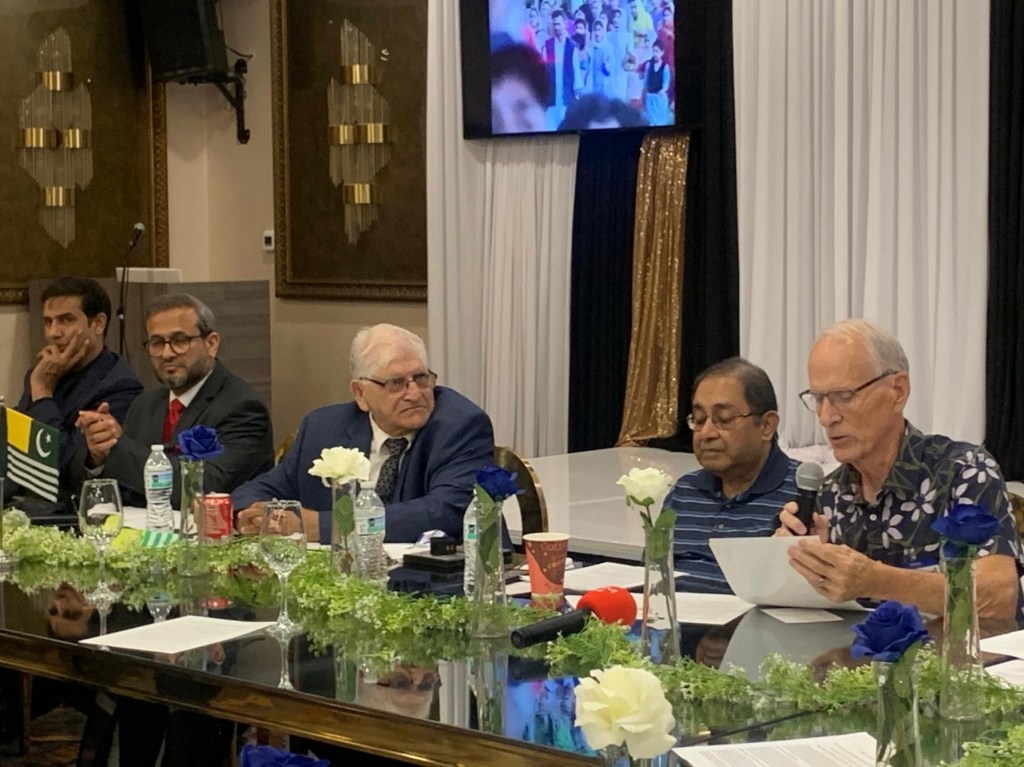
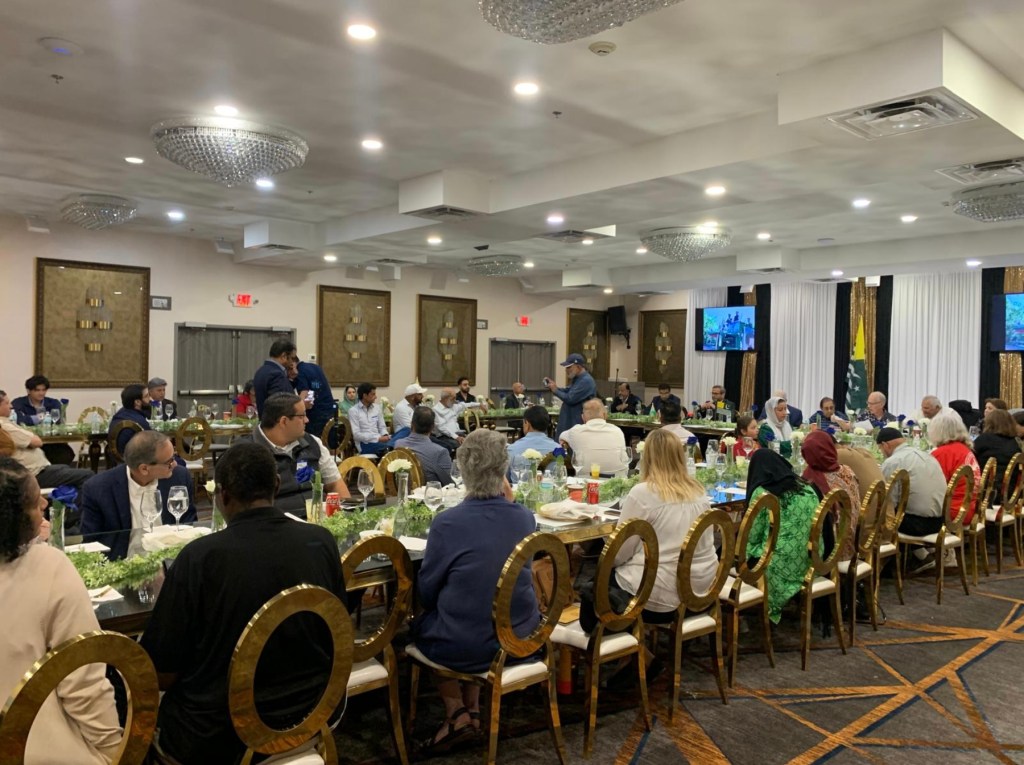
On September 2, 2024, Texas state and city legislators came together with exiled pro-independence Kashmiri leadership to highlight the struggle and commitment of incarcerated Yasin Malik in the quest for a United Independent Kashmir as the only viable solution for the Kashmir dispute at the Kashmir Peace Conference co-hosted by nonprofit organizations in Dallas.
The central theme of the conference was to draw the attention of the international community, especially the P5 members of UNSC, to persuade India and Pakistan, the key parties to the Kashmir dispute, to resume bilateral dialogue, currently at an all-time low, through back-channel negotiations for the permanent peaceful resolution of the Kashmir dispute by the demand of Kashmiris for the right to independence.
“I have dedicated my life to promoting peace and stability in Kashmir,” said Raja Muzaffar, the acting chairman of the pro-independence Jammu and Kashmir Liberation Front (JKLF) and a key organizer of the conference who lives in exile in the US.

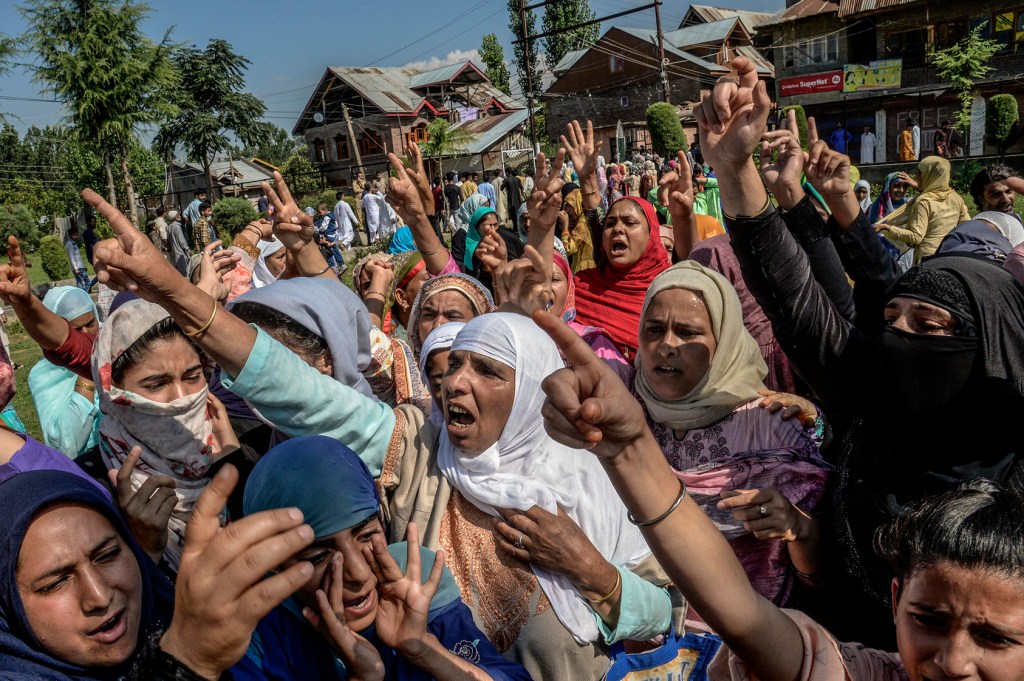
Malik is the chairman of Srinagar-based pro-Independence JKLF, an armed resistance turned political party founded in the 1980s, which also maintains a significant presence in Azad Jammu and Kashmir (AJK) and Gilgit Baltistan (GB) territories of Kashmir under Pakistani control. Opposite to mainstream politics of dominant pro-Pakistan or pro-India national parties in the region, JKLF promotes the ideology of reunification of all territories of Jammu and Kashmir under the control of Pakistan, India, and China as one united secular independent Kashmir. For these unconventional views, in 2019 Indian government barred JKLF from taking political activities and discourse under the Unlawful Activities Prevention Act (UAPA) in the Indian Occupied region of Jammu and Kashmir (IOJ & K). New Delhi then sought his custodial remand in a trumped-up terror funding charge, and Malik is currently serving a life term in Tihar jail in the case.
The organizers begin the conference with a tour of a photo exhibition for the attendees displaying the photographs of the 2007 Safar-e-Azadi or “Journey for Freedom” campaign led by Malik, long after denouncing the armed struggle for freedom and justice in Kashmir. During that journey, Malik then toured different areas of IOJ&K, where he collected a million and a half signatures of Kashmiris demanding recognition as the primary party to the Kashmir dispute between India and Pakistan.
The guest speaker of the conference, Toqeer Gilani, chief of JKLF in AJK and a main voice in the independence movement from Pakistani control of Kashmir, arrived in the USA a month ago after escaping persecution at the hands of a military junta in politically motivated cases. He insisted that the nature of the Kashmir conflict is illegal and brutal occupation, contrary to what New Delhi and Islamabad propagate as a dispute.
“Initially, the issue of Kashmir was as simple to understand as a smile, but now it is made as complex as the road system of the United States where you cannot reach your destination without navigation,” said Gilani at the conference.
The photographs of a similar ongoing Safar-e-Azadi (Journey to Freedom) campaign carried out by Gilani in AJK were shown in the photo exhibition. In contrast, Gilani led a 13-day “Freedom March turned Sit-in” in 2019 on the outskirts of Muzaffarabad in Jaskool, near de facto border, demanding the evacuation of Pakistani and Indian forces from the disputed territories of Kashmir in the aftermath of Modi’s government 2019 controversial revocation of the special status of Jammu and Kashmir. Similarly, photographs of a six-day symbolic sit-in camp staged by JKLF demanding the release of Malik at Poonch’s Tatrinote, a confining valley in the foothill of Pir Panjal Range, were displayed.
Gilani, in his speech, read a memorandum, unfolding the pessimistic cost of bloody occupation being paid by the Kashmiris in a physical, social, political, religious, and financial manner on both sides of the Line of Control (LoC) and an optimistic future that lies ahead in the form a demilitarized Kashmir, a first step towards achieving a durable solution to the decades-long conflict between India and Pakistan in the region. Followed by establishing people-to-people contact to reunify and reunite with their divided families by scrapping the established Shimla Agreement between India and Pakistan in 1972, separating Indian and Pakistani control of Kashmir through a military line.
At the entrance of the conference room in the hallway, a Declaration of Independence of Kashmir was displayed on the easel. The Declaration of Independence was approved in a convention held in September of 2021 by the JKLF in Pallandri, the site of the first capital of AJK Jinjahell. It was written by Muzaffar and vetted by Gilani. After the photo exhibition, guests’ signatures were collected to endorse the Declaration of Independent Kashmir.
Terry Meza, Texas state representative, mindful of the dynamics of ongoing issues in the Indian subcontinent, shared her story of getting familiarized with the Kashmir issue along with her colleague Jasmine Crockett, now a congresswoman, by attending conferences on Kashmir in the past.
“Both Jasmine [Crockett, Congresswoman] and I agree that whatever the issue is we always are on the side of the oppressed,” said Meza. “In this case, that means that we side with the Kashmiris that we favor their desire to have independence and self-determination,” she further added.
Abdul Khabeer, the city councilman of Irving, touched on the denial of basic humanitarian rights to Kashmiris and the daily hardships endured by them as a consequence in all spheres of life as a matter of grave concern for the global community.
“The statistics we hear, thousands of deaths, countless arrests, and unimaginable sufferings, represent real people,” said Khabeer. “They are mothers, fathers, children, and elders who, like all of us, dream of a life free of fear and oppression,” he added.

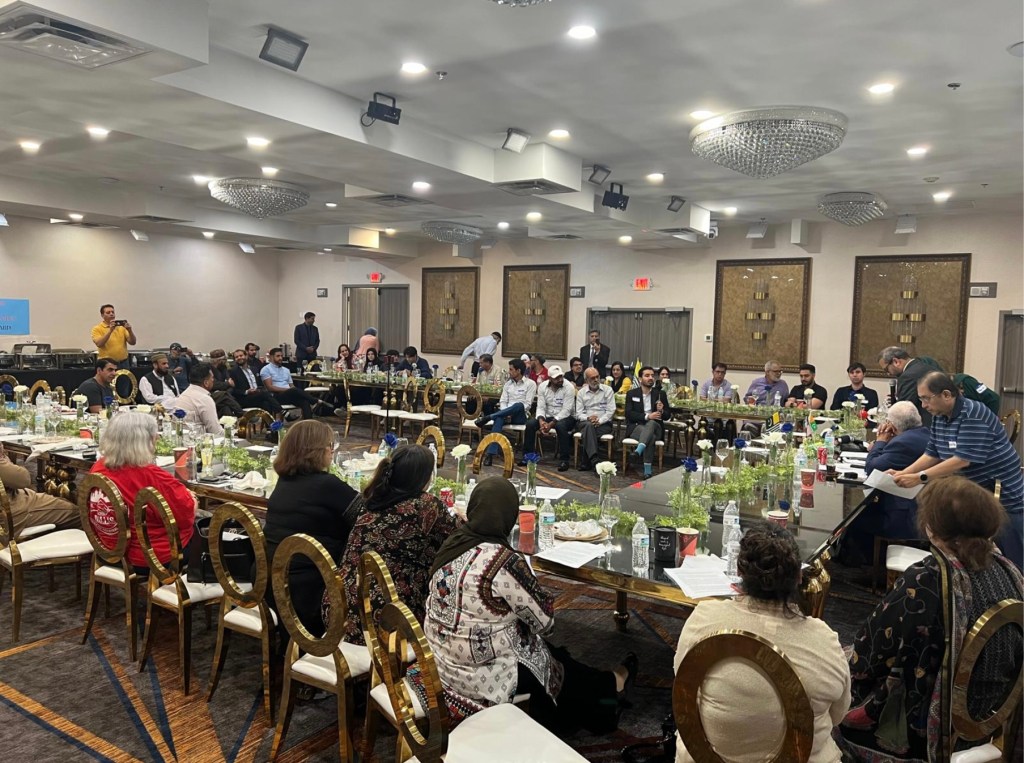
As a Board Member, Bill Maxwell represented Dallas Peace and Justice Center, one of the host organizations of the conference, and a longtime supporter of peaceful resolution of independence of Kashmir, endorsed Gilani’s vision as the only viable solution for the Kashmir dispute. Additionally, in the current times, as the Indo-Pak region is grappling with many challenges and climate change taking precedence, Maxwell demands urgent efforts on both sides to forge long-lasting peaceful solutions for the Kashmiris.
Similarly, Syed Fayyaz Hassan, a member of South Asian Democracy Watch, another co host organization of this conference, took the floor. He spoke on the challenges of consciousness in today’s world for finding solutions to the human suffering in Palestine and Kashmir and its moral implications.
“I am not a Kashmiri by birth but feel as part of this struggle for human dignity, for peace and self-determination,” said Hassan.
Tessa McGlynn, a human rights activist during her speech drew parallels between the Palestine and Kashmir conflicts and their adverse impacts on the women living under occupation. She explained that the people of both states are facing a settler colonialism legacy that goes back to 1947-48 and is still ongoing through the disposition of land. Not only did she critique US foreign policy on Kashmir vis-a-vis India, but also the political discourse in America surrounded by the atrocities happening in the world and termed it as “disingenuous.”
Huda Nadeem, the board member of Kashmir Empowerment Hub, spoke about the resilience of Kashmiri women and their sufferings under the brutal occupation in terms of physical and sexual violence and its aftermath in torn-apart Jammu and Kashmir.
“The struggles of Kashmiri women and girls are a reminder of the human cost of the conflict,” said Nadeem. “They are mothers, daughters, sisters, wives, half-widows, each with a story of pain, loss, and survival,” she added.
Apart from the legislators, the conference attracted academics, activists, journalists, students, community leaders, and ideological members of JKLF from different states. It lasted for a few hours and ended with a Q&A session.
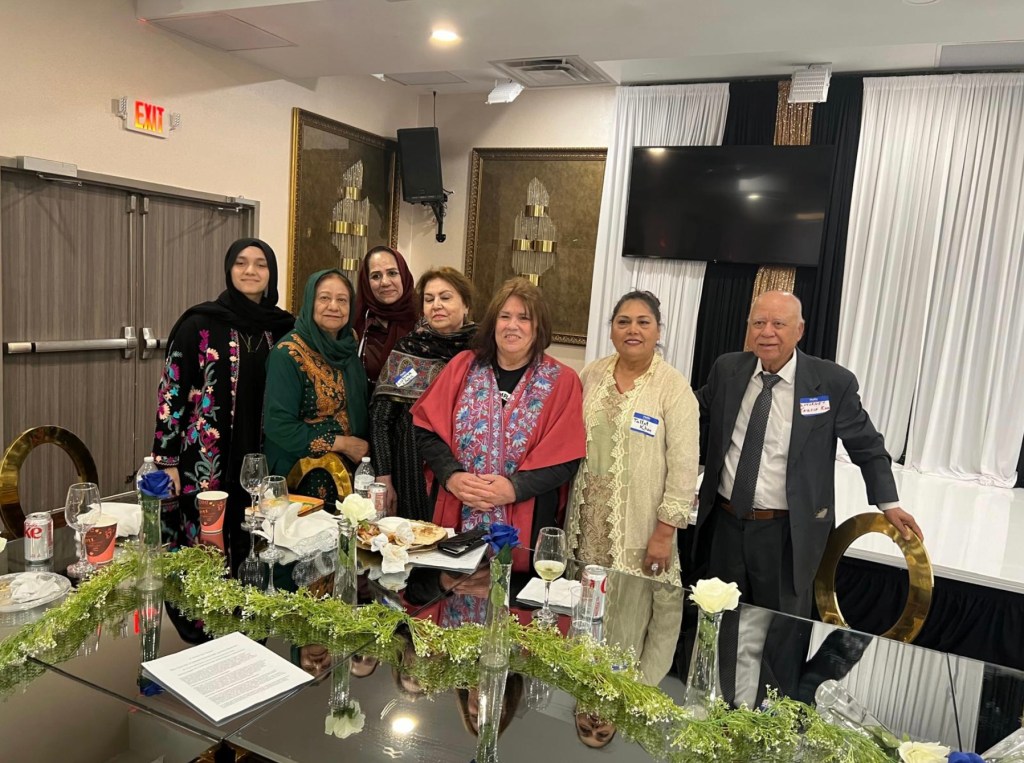
A short pictorial film was projected on the screens behind the guest speakers in the background throughout the conference, highlighting Malik’s struggle for an independent Kashmir. Meza was presented with a Kashmiri Shawl as a souvenir from a woman member of JKLF, Kaneez Muzaffar.
“The accession with India and Pakistan is no longer relevant. It is time to read the writing on the wall,” said Muzaffar.
 The Bengal Gazette