By Anil Wasif
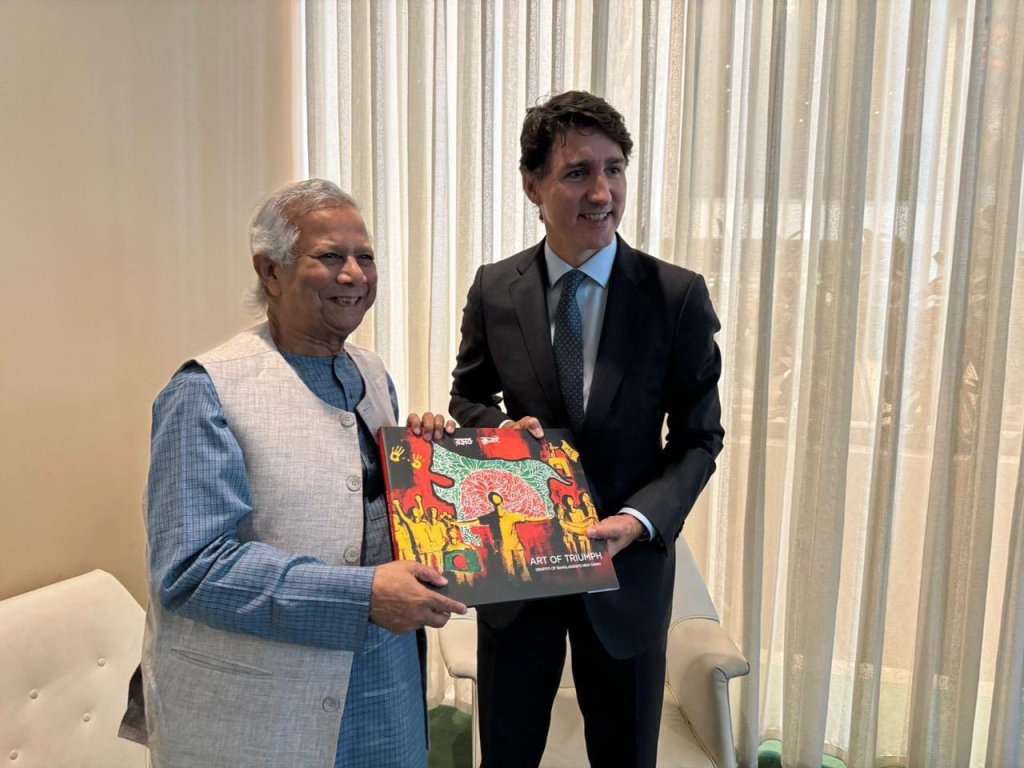
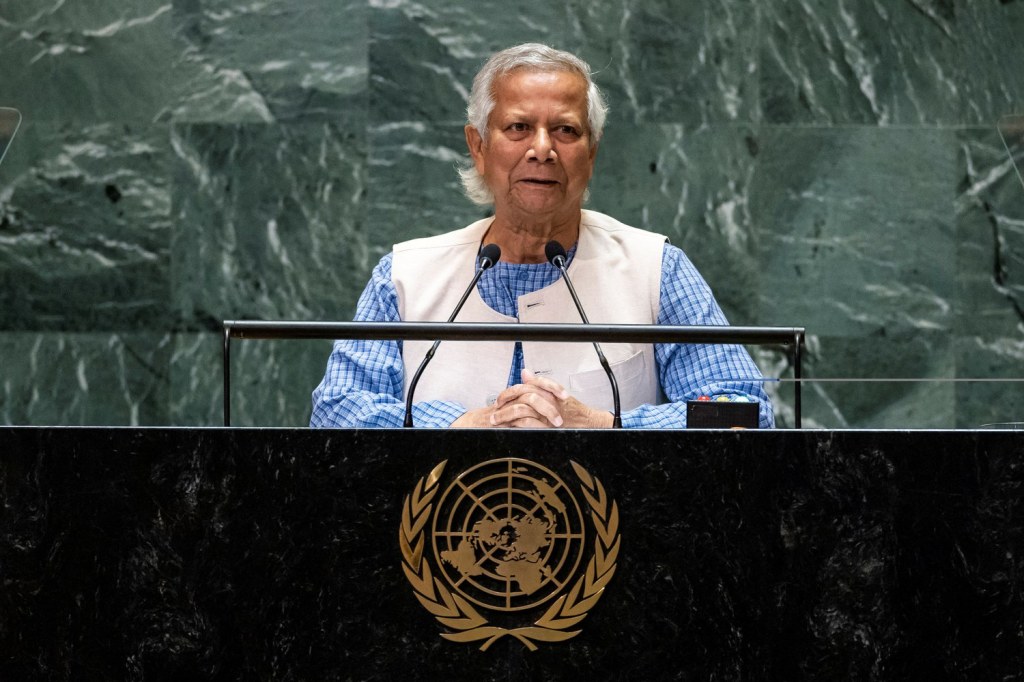
In a world where youth uprisings weigh heavier on political calculus, Bangladesh is the latest stage where young people are rewriting the rules. This was Yunus’s key message to world leaders at the 79th United Nations General Assembly (UNGA), as Bangladesh opened both arms towards the Bretton Woods system once again. While the quiet meeting between Trudeau and Yunus took place under Chatham House rules, announcements from both premiers focused on the Canada-Bangladesh relations with discussions on three things: institutions, youth and development.
The linchpin in the equation: Bangladesh’s young people.
Whether it’s revamping institutions based on outdated policies or administration or increasing sustainable development, research suggests that the role of the majority working class usually determines success in both areas. For Bangladesh, that majority is its young people, with the advent of, a looming question: Is this truly a new era or will old guards remain on top?
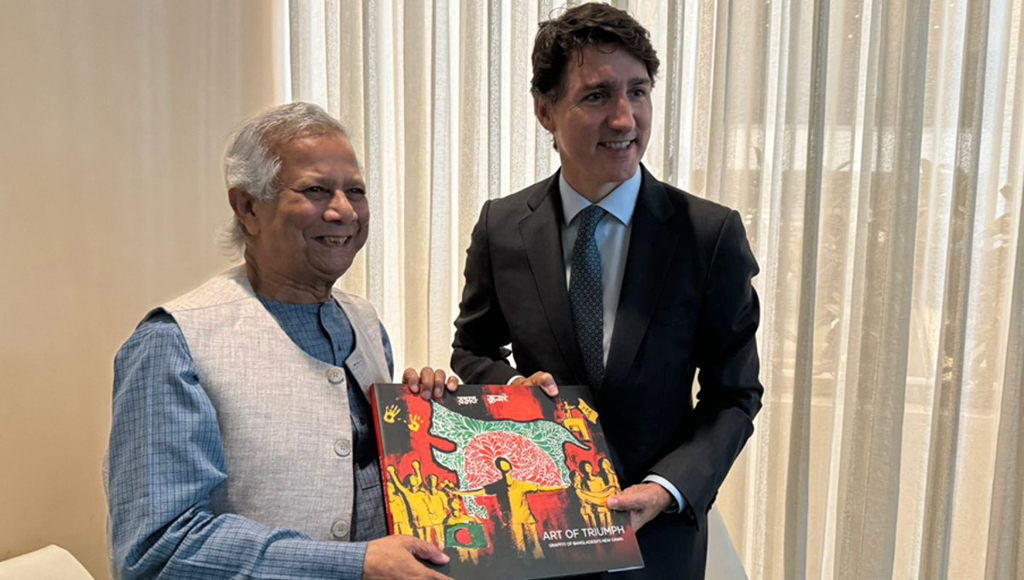
The answer to that question lies in “The Art of Triumph,” a photo book handed by Yunus to Trudeau. The book is a message in a bottle of the collective power of young people in Bangladesh. It’s a signal of a turning point that sent ripples far and wide, beyond the Bay of Bengal. The book is Yunus’s way of asking Trudeau, and the rest of the G-7, to bet big on Bangladesh’s young people.



Doubling Down on Leadership Development
While Bangladesh is no stranger to youthful defiance, revolutions are short-lived in our history. Our revolutionary story dates back to 1952 Bengali Language Movement, where students rallied for their language rights, a movement that ultimately laid the groundwork for independence in 1971.
This did not end in 1971. In the year 1990, students played a central role in pushing out a military dictator, General Ershad. In each instance, the country’s young activists have sparked change—but they’ve often seen their movements co-opted or faded into the shadows once the difficult task of governing begins.
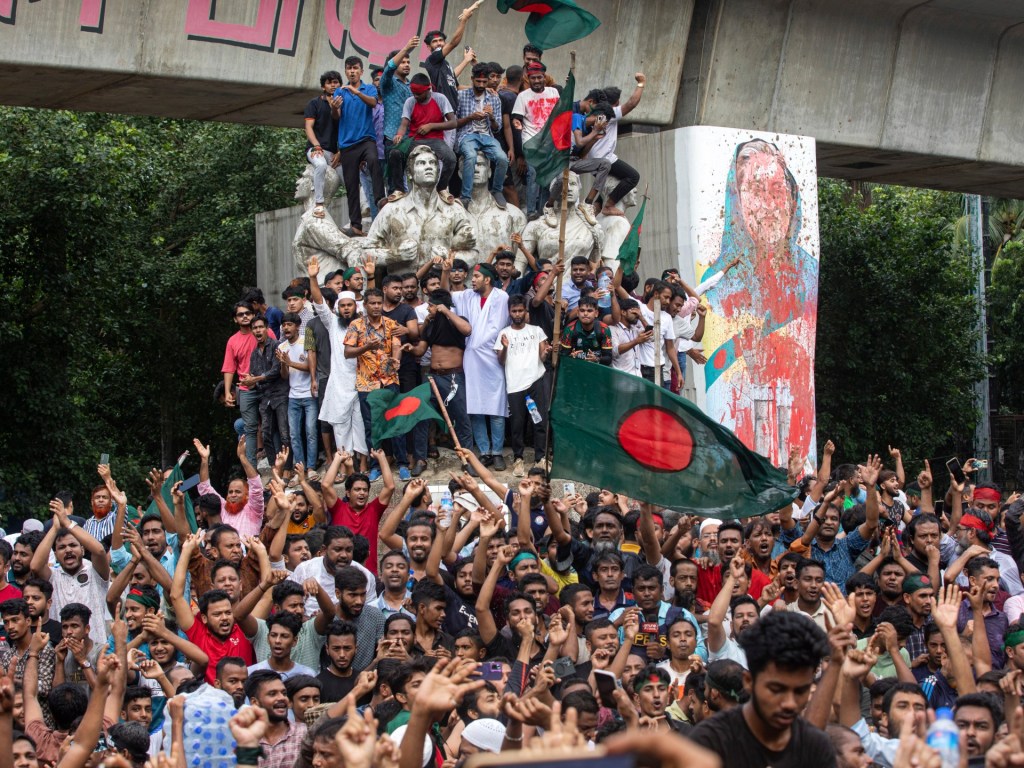
Fast forward to 2024, and history seems to be on repeat yet again. The protests this summer were electric—young people filled the streets, armed with smartphone cameras and slogans. They took on tear gas, social media bans, and the full might of the state, demanding an end to corruption and a government that truly worked for them. The resignation of Hasina, a fixture of Bangladesh politics for decades, was a stunning win. But now, as Yunus’s interim government talks about reforms, one cannot help but feel a spine-tingling sense of déjà vu.
In the years after its revolution, Tunisia saw youth unemployment soar, leading to a new wave of protests and disillusionment. Bangladesh faces the same storm clouds: a generation hungry for jobs and change, but wary of empty promises. To avoid repeating history , Yunus’s narrative has been to cultivate purpose-driven youth leadership, and here’s what Canada could realistically do to support his mission.
The timing of potential collaborations between Canada and Bangladesh to develop a talent pipeline for young Bangladeshi politicians aligns with a crucial period for Canadian universities. According to the Globe and Mail, universities are facing pressure to balance their budgets over the next five years, and international tuition has been a key area of revenue, especially in light of decreasing government funding.
One notable example of a talent pipeline created through educational programs is the long-standing partnership between the United States and China through initiatives like the Fulbright Program and the Schwarzman Scholars program. By creating targeted programs that cater to Bangladeshi students interested in political leadership and governance, Canadian universities could both fill seats and build new revenue streams, while contributing to Canada’s broader diplomatic and development goals. Programs focused on governance, civic leadership, and public administration could attract a niche group of students—aspiring leaders eager to make a difference in their home country. However, it must be assured that these programs ensure cultural responsiveness and grassroots engagement which can be delivered in partnership with local universities in Dhaka to ensure cultural-responsiveness and grassroots engagement.
Today, over 9,000 Bangladeshi students are enrolled in Canadian universities, with sector-wide contributions to the Canadian economy. On this note, ongoing geopolitical tensions of both countries with India provides yet another signal for Bangladeshi-Canadian diplomats to work together on increasing student enrollment at Canadian universities, and creating long-term multi-year programs that help Canada gain footing in the Indo-Pacific. Politically, opinions may be divided on who gets to slice and dice South Asia, but practically, the students would benefit from new opportunities and perhaps a better shot at life itself.
While these initiatives may not immediately thwart the political ambitions of parties vying for power, they do encourage more dinner-table conversations about politics and public policy, making such careers attractive and structured for aspiring nation-builders.

An Ace in the Deck called Digital Economy
The focus on Bangladesh’s youth isn’t just feel-good policy commentary, but rather a cold strategic calculation based on UNDP reporting over 63.7% of Bangladesh’s population of 180 million people to be under the age of 35.
According to the Centre for Policy Dialogue (CPD), addressing youth unemployment in Bangladesh requires aligning job market realities with the expectations of young job seekers. Despite having over 63.7% of its population under 35, Bangladesh faces a youth unemployment rate of 8%, with many graduates entering informal, low-paying jobs offering little stability or benefits. This gap between expectations and reality has driven disillusionment among the youth, contributing to recent protests
Canada can play a role in mitigating this challenge through well planned and articulated programs addressing the skills gap. Partnerships with organizations empowering Bangladeshi communities could introduce training in digital skills, entrepreneurship, and sustainable practices—similar to initiatives like the Canada Service Corps. These efforts could help prepare Bangladeshi youth for emerging sectors and align with the country’s economic needs
Further, direct funding through cross-sectoral partnerships with tech giants like Google or Amazon could play a pivotal role in expanding Bangladesh’s digital infrastructure, following a model already seen in India. In India, North-South collaborations and investments in digital public infrastructure, such as the recent Google for India 2024 initiative, have been instrumental in fostering a robust digital economy. This has significantly reduced youth unemployment by creating new digital job opportunities, from tech startups to freelance digital services. Such investments have helped India develop a thriving digital workforce, equipped with skills relevant to the global market.
However, these programs must be paired with the right domestic reforms, and policies that induce better job conditions and competitive private-sector salaries, to fully capitalize on the potential of Bangladesh’s young workforce.
Going All-In on Youth-Led Business
Encouraging entrepreneurship could be a crucial strategy for tackling youth unemployment in Bangladesh. With a significant young population and a mismatch between job seekers’ expectations and the reality of the labor market, entrepreneurship offers a way to create new opportunities. A strong entrepreneurial ecosystem can empower young people to create their own jobs and generate employment for others, helping address the country’s high rates of underemployment and informal work.
Canada has experience supporting entrepreneurship in emerging markets, such as through its Equitable Prosperity Through Private Sector Development in Kenya project. This initiative, funded by Global Affairs Canada, focused on building the capacity of small and medium-sized enterprises (SMEs) in sectors like agriculture and construction. The project helped over 52,000 small entrepreneurs, providing business training, market access, and facilitating private investments. By fostering strategic alliances between SMEs and financial institutions, Canada played a role in enhancing the profitability and competitiveness of these businesses.
A similar approach could be applied in Bangladesh. By supporting partnerships between Canadian institutions, Bangladeshi universities, and local business hubs, Canada could help equip young entrepreneurs with the skills required to succeed in digital services, sustainable agriculture, and e-commerce.
Furthermore, inducing foreign direct investments from Canadian tech giants like Shopify, similar to those seen in other markets, could provide vital funding and mentorship for young innovators. These efforts could aid in creating a vibrant entrepreneurial ecosystem in Bangladesh. This will offer a pathway for reducing youth unemployment and fostering long-term economic resilience. On this issue, there must be a diary of speeches from the acting Chief himself, speaking at top universities across the globe , where he advocated for the same.
Reasons to Support Canada’s Bet on Young Bangladeshis
Bangladesh’s fate isn’t just a domestic issue—it’s a subplot in a larger global story. As the country transforms, Washington, Beijing, and New Delhi are all watching, each with their own stakes in the game. China’s investments in the region are strategic, aimed at integrating Bangladesh into its Belt and Road Initiative. Meanwhile, the U.S. positions itself as a democratic ally in the region as seen with Biden’s great american bear hug photo-op with Yunus during UN GA.
From Canada’s standpoint, supporting Bangladesh’s student led movement offers a chance to carve out its own role—a counterpoint to China’s infrastructure-heavy approach. This strategy focuses on human capital and democratic norms rather than infrastructure. But the risk is real. If Yunus’s government fails to deliver on its promises, Canada’s efforts may be seen as another Western intervention gone wrong, paving the way for a backlash and a return to authoritarianism.
Sri Lanka’s experience serves as a lesson for Bangladesh: without a clear plan and leadership, revolutionary energy can quickly dissipate, leaving entrenched powers intact. In July 2022, mass protests forced President Gotabaya Rajapaksa to flee, as citizens stormed the presidential palace, defying police lines. The scenes of defiance inspired similar uprisings in Kenya, Bangladesh, and Indonesia over the summer. Yet, despite this initial victory, Sri Lanka’s ruling elite quickly regrouped.
Ergo, while the scene at UNGA 79 between Yunus and Trudeau was brimming with optimism, diplomatic moments can often fade under the harsh light of reality. For Canada, this is a chance to be more than just a distant observer—to be a true diplomatic partner, willing to invest in the long-term potential of Bangladesh’s next generation. Yet, if these efforts become another chapter of empty promises, the disillusionment will be felt on both sides.
The stakes are high, the players are shrewd, and the clock is ticking. Ultimately, it’s the slow, often frustrating work of building a future that lives up to that promise of The Art of Triumph. Yunus and Trudeau can shake hands, but it’s the youth of Bangladesh who continue to determine whether this moment is a turning point or just another footnote.
The young people of Bangladesh have shown the world what they can do, it’s time for the world to pay it forward.
About the Author:
Anil Wasif is an award-winning public sector leader with comprehensive experience in economic policy and social development.
Currently, he manages the Research team at Infrastructure Ontario, upon successive roles in the Ontario Government over the past 9 years.
Anil sits on the advisory board of the Max Bell School of Public Policy at McGill University and the Governing Council at the University of Toronto.
He is Trustee and Director of Strategy at BacharLorai, an international non-profit organization, empowering Bangladeshis worldwide.
Anil occasionally writes for leading policy outlets and news columns, and enjoys travelling with a purpose.
Opinions are his own and do not represent the views of any of his affiliations.
 The Bengal Gazette