Sanchita Saxena
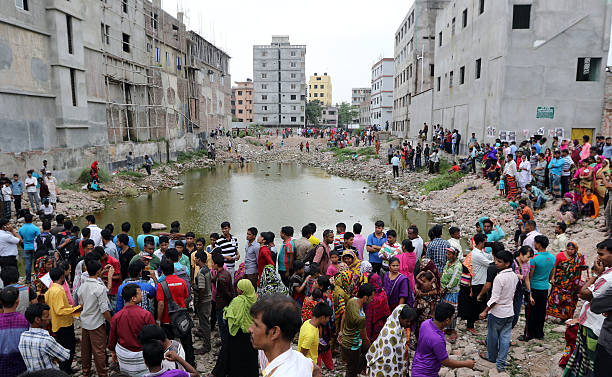
For those of us working on labor issues in global supply chains, April 24, 2013 will always be known as the deadliest garment factory accident in history. More than 1,125 people died and 2,000 were injured when an eight story building in the outskirts of the capital of Bangladesh, Rana Plaza, collapsed. The building, which was originally built as a shopping complex, was not meant to serve as a garment factory filled to capacity with more than 3,000 workers and their machines. Four stories had been added to the building without proper permits or documentation. Large cracks in the building had appeared the day before the disaster, and other than the garment factory, all other parts of the building were closed that day. When garment workers pointed out the cracks to their supervisors, they were reprimanded and told to go back to work, otherwise they would lose their jobs.
At this time, I was just finishing my first book, Made In Bangladesh, Cambodia, and Sri Lanka: The Labor Behind the Global Garments and Textiles Industries (2014, Cambria Press) and I requested an extension from the publisher to be able to address this horrific disaster and what, some would argue, was a turning point in the industry. Now, more than five years later, I am working on an edited volume (Forthcoming, 2019, Routledge), bringing together 15 different authors from a variety of disciplines and approaches to try and understand whether the concerns following the Rana Plaza disaster have been addressed and if not, what new approaches might look like.
The volume does three things through its collection of chapters that are both theoretically analytical and “solution” oriented. First, it puts Rana Plaza into a larger context to help readers understand the structural, managerial, and political conditions within which poor labor standards flourish. Second, the book productively critiques the existing plans that are in place and highlights their limitations with the hopes of new and improved methods to address these critical concerns. And finally, many of the authors provide a way forward by examining innovations, new ideas, and novel approaches that can all be part of a larger set of “solutions” to address workers rights post-Rana Plaza that go beyond third party monitoring initiatives.
One of these novel approaches is articulated by Dr. Meenu Tewari in her chapter(1), drawing on lessons learned from an innovative place-based experiment in relational sourcing in India’s Mewat region (2009-2012, and ongoing). Her fundamental argument is that we need to move beyond the workplace and into the community where the most vulnerable, informal garment workers live and work to really make a difference. To ensure that benefits reach them, we need to target the places, localized labor markets and communities that they are a part.
In addition to place the state needs to get involved by forging new sourcing models that involve networked ties between public sector agencies, branded buyers, and locally rooted community associations (or NGOs) that can provide continuous oversight, accountability and learning as global (and local) work reaches those that are the most unprotected at the base of the garment industry’s value chains. By building up local relationships, workers can become a central part of a local movement to creating safer working conditions and decent work. Adopting an approach such as this could be critical to preventing horrific tragedies such as Rana Plaza from occurring again.
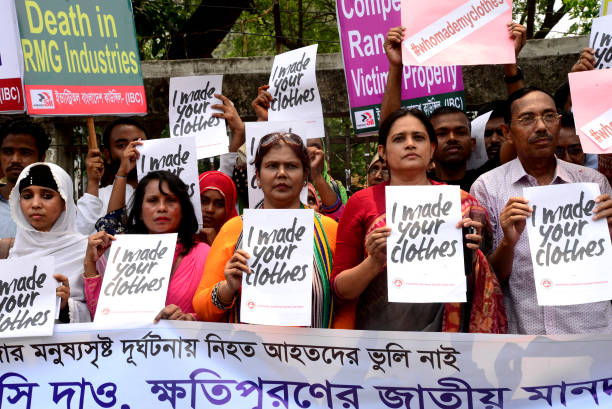
The Mewat experiment is a work in progress, but its progress so far offers at least three lessons about how and under what conditions labor protections can be extended to those at the bottom of global value chains. First, it shows that it is possible to build relational contracting networks even in the most informal segments at the base of global production networks. These networked models, as in the Mewat case, are place-based, anchored in territorial labor markets, and not just sectoral. Besides the layering possibilities, a place-based focus (on an area-based local labor market instead of just a firm or shofloor) also allows the extension of benefits (of safe work, skill) to workers in the labor market, and beyond individual workplaces. A territorial strategy thus can be an important complement to sectoral strategies of workplace protection and monitoring.
Second, experiments like Mewat are important exemplars of the need to look beyond continuity of form, to continuity of the spirit of a program as it evolves. The particular partnerships or institutional arrangements that lead to initial success may look quite different from the structures needed for it to persist and evolve as it grows later on. Finally, it is clear that to reach workers at the bottom of global chains, it is clear that the state will need to get involved. The Mewat case sheds light on how intermediation by the state – and even its material involvement early on during the 15 years of organizing the communities socially – was of critical importance to providing a platform of legitimacy on which other private and collective actors could come together and collaborate. The state’s role is going to be critical if these spatialized experiments that are extending good labor practices down to the bottom tiers global value chains and into communities and places where workers live are to continue and succeed.
 The Bengal Gazette